Case study is a work in progress

(Best viewed on desktop)

Designing Trust into an AI Support System

A three-surface agentic AI system that replaces a bot customers hated with one that actually resolves their problems

Timeline

Jan'26 - Present
(10 Weeks)

Jan'26 - Present
(10 Weeks)

Team

1 Senior Product Designer (ME)
1 Product Manager
1 AL/ML Engineer
2 Junior Product Designers
2 Engineers

My Role

  • Led the end-to-end design of ClickBot across three surfaces

  • Researching user needs

  • Defining the AI confidence framework

  • Designing the conversation flows, and delivering a complete design system from scratch.

  • Led the end-to-end design of ClickBot across three surfaces

  • Researching user needs

  • Defining the AI confidence framework

  • Designing the conversation flows, and delivering a complete design system from scratch.

Impact

  • 56% improvement in usability, SUS from 54 to 84, below poor to above good

  • 3× more customers found their way to a human agent when they needed one

  • Zero turns to first resolution, customers answered before typing a single word

  • 56% improvement in usability, SUS from 54 to 84, below poor to above good

  • 3× more customers found their way to a human agent when they needed one

  • Zero turns to first resolution, customers answered before typing a single word

The Project

The client had a support bot handling 4,200 tickets a week.

The client had a support bot handling 4,200 tickets a week.

  • Customers who hit the bot were 3× more likely to leave a negative review

  • No live data layer. No escalation path. No agent integration.

  • The problem wasn't the interface, it was the foundation.

Redesigning it would mean designing on top of a broken foundation. The decision: replace, not redesign.

Analysis

Three People.
Each failed in a completely different way.

Three People.
Each failed in a completely different way.

Custome Chat: The Old Design

61% of conversations ended
with no answer.

61% of conversations ended
with no answer.

43%

Bot resolution rate

Industry Average: 65%

2.9

CSAT score out of 5

Benchmark: 3.8+

14min

Avg escalation handle time

vs. 5min for direct contacts

54

SUS score - old bot

Below "poor" threshold of 68

Design Decision.01

The opening message is the whole product.

The opening message is the whole product.

0

Users read the menu tiles, every single one typed directly instead

8 / 8

Customers expected the bot to already know their order before they said anything

1

Message to resolution in the final design, the answer before the question

Design Decision.02

Designing for what the AI doesn't know.

Designing for what the AI doesn't know.

Design Decision.03

Knowing it's stuck isn't enough. The bot has to act on it.

Three People.
Each failed in a completely different way.

Agent Workforce

The handoff: What the agent receives - is a design surface too.

Three People.
Each failed in a completely different way.

Before, the bot stepped aside and the agent started from scratch - no order data, no context, no reason why. In the redesigned workspace, the handoff carries everything the agent needs to start mid-resolution.

Before
After
Product Designer Portfolio

Admin Dashboard

What used to require a developer now takes operators five minutes.

Three People.
Each failed in a completely different way.

Self-service editing only works when the person holding the keys can also see every action, catch every mistake early, and switch anything off in seconds.

Design System & Implementation

The design system behind the decisions

Three People.
Each failed in a completely different way.

Color tokens were defined by behavior, not by brand. Every spacing value follows an 8px grid. Every component was documented for handoff before implementation began.

Outcome

Four decisions. One system. Here's what it was built to move.

Three People.
Each failed in a completely different way.

Learnings

01

About AI Limitations

Early designs treated chatbot responses as definitive answers. Watching operators revealed they needed to know when the bot was guessing versus certain. I learned transparency about AI limitations builds more trust than hiding them, leading me to add confidence indicators and "I'm not sure" states.

02

Efficiency over simplicity

I designed with maximum simplicity, minimal buttons, guided flows, hand-holding. But experienced operators were frustrated by "training wheels." They wanted keyboard shortcuts and bulk actions. I learned designing for efficiency at scale is different from first-time use, the best systems let users graduate from novice to expert modes.
See other projects

Three People.
Each failed in a completely different way.

Cover

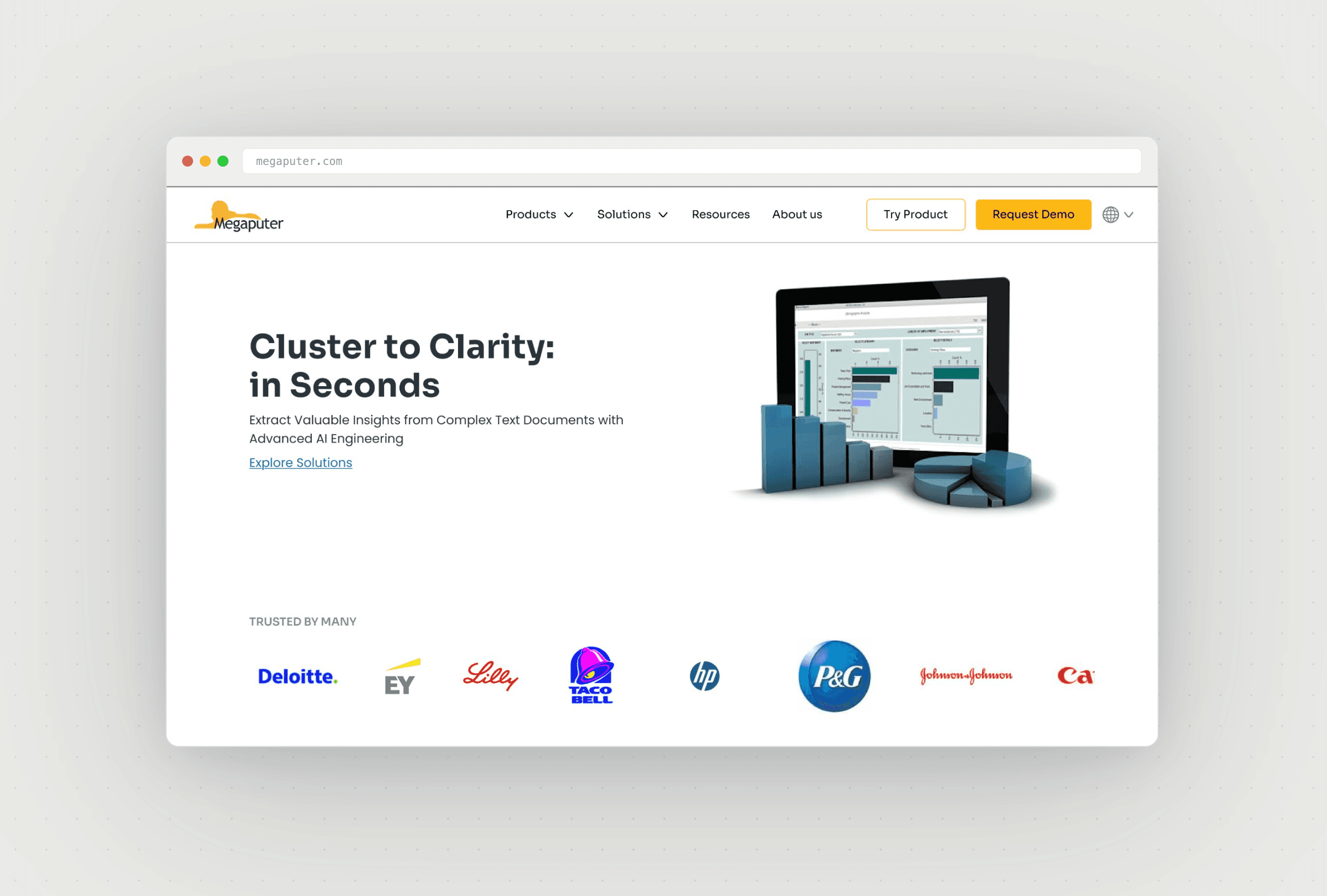
Megaputer

Website redesign

Cover

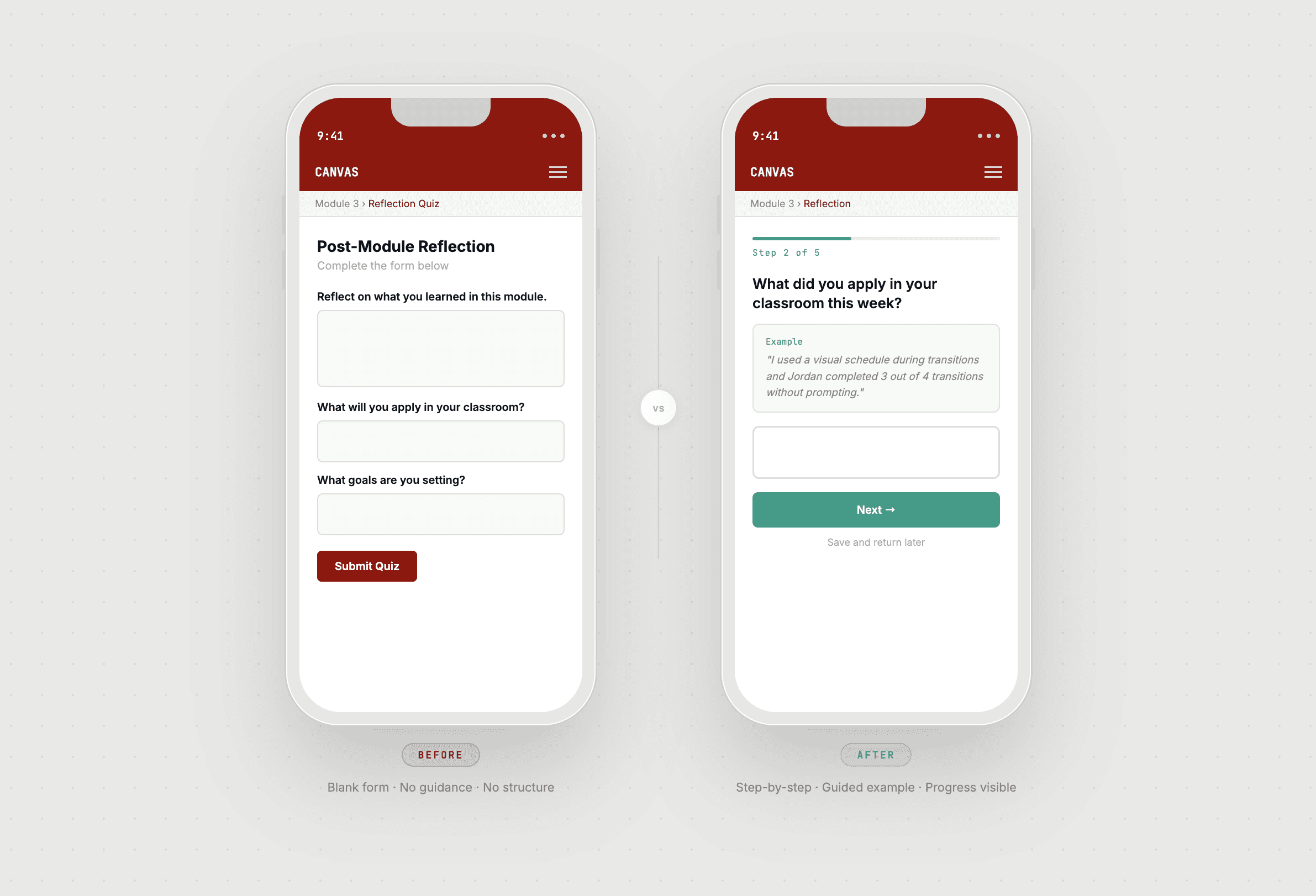
Indiana University | Hands in Autism

Canvas LMS Design - Coming Soon!

If you made it this far, thank you for taking the time!
May your bots be helpful and your escalation paths short.

Currently accepting good problems and better conversations.

Yours truly,

Currently accepting good problems and better conversations.

Yours truly,

Srithika Sheetal Suvarna